








































BRIDGEWATER, Va. – BC Director of Instructional Design, Emily Goodwin vividly remembers when ChatGPT first became a faculty concern.
“At the release of ChatGPT, that January, we were at a faculty workshop, and it got brought up, Goodwin said.
Since the public release of ChatGPT in late 2022, artificial intelligence (AI) has rapidly expanded into classrooms, workplaces and daily life. According to Business of Apps, in 2025, ChatGPT reached nearly 800 million global downloads, surpassing TikTok as the fastest-adopted consumer app in history. The same source states that the same year, ChatGPT and Google Gemini were the most popular apps in the United States.
“It’s here, it’s not going away, so how can we incorporate it so that students are prepared for their careers, ” Goodwin said.
Artificial intelligence has become a new reality, forcing faculty to rethink how they teach. Rather than resisting the technology, Bridgewater emphasized preparation, focusing on equipping faculty with the tools and strategies needed to teach in changing educational environments.
Bridgewater’s faculty training
“The college has done a good job at letting faculty decide for themselves how they want to use AI,” Senior Instructor of Communication Studies Jennifer Babcock said.
The Wade Institute for Teaching and Learning plays a key role in preparing faculty to integrate AI into higher education. According to the Bridgewater College website, the institute, led by Professor of Biology Robyn Puffenbarger, holds an annual pedagogy project beginning in the summer and extending through the school year.
“Just trying to help faculty appreciate what it can help students do,” Puffenbarger said. “I hope that we see it as a tool.”
“In the summer of 2024, Dr. Puffenbarger and the Wade Institute hosted a two-day pedagogy project and the theme was using AI in the classroom,” said Babcock. “That was great, it was still pretty new. The purpose of that was to help us think through all the possibilities, some ethical issues, and to figure out what the landscape is.”
Professor Babcock explained she uses AI to help her outline and create low-scale assignments.
“I wanted students to look at some academic journal articles about culture and nonverbal language,” Babcock said. “It was an in-class activity. I needed them to be able to find things and understand things quickly. That’s a great use for AI, asking it to tell you what it means in regular everyday language so we can then have a conversation in class.”
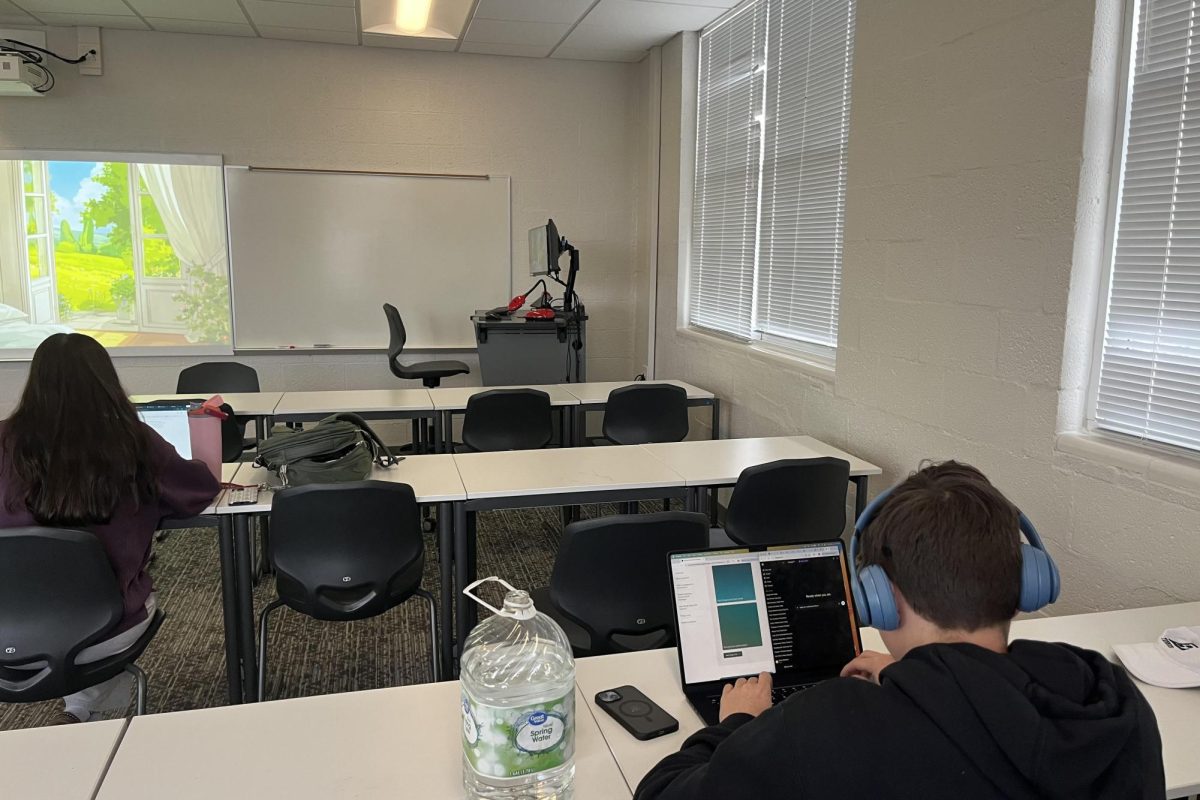
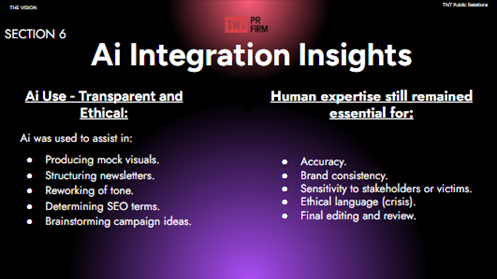
During Communication Studies Professor Jeffrey Pierson’s Public Relations course last semester, AI was integrated into the course as a tool for managing promotional campaigns and crisis communication. Pierson told the class the goal was not to allow AI to complete assignments, but to teach students how to use it responsibly in professional settings.
According to his syllabus, students were encouraged to use AI for brainstorming, outlining, and enhancing their understanding of course material. However, Pierson required students to critically assess and properly cite any AI-generated content used in their work. The syllabus further clarified that AI tools should not replace a student’s own analysis or engagement with course material.
In one assignment, students were tasked with developing a full crisis communication plan for a fictional airline titled “Crisis at 30,000 Feet.” Working as a mock public relations firm, students drafted stakeholder communication strategies, outlined short and long-term recovery plans and wrote an official statement responding to the crisis. While AI assisted with organization and redefining messages, students were responsible for ensuring accuracy and clarity, reinforcing Pierson’s emphasis on professional accountability.
Preparing for an AI driven academic future
According to Campbell Academic Technology Services, 86% of college students use AI, and 93% of higher education faculty expect the implementation of AI for work purposes to increase.
These figures reflect a broader shift in higher education, as institutions adjust policies and instructional strategies in response to the growing presence of artificial intelligence in classrooms.
As AI continues to evolve, faculty leaders acknowledge that policies and strategies may continue to change. By investing in faculty development and encouraging open dialogue, Bridgewater College is positioning itself to adapt to an educational landscape increasingly shaped by AI, Puffenbarger said.
Looking ahead, AI may become more embedded in the curriculum at Bridgewater.
“We’re going to start next year, to have classes that are specifically focused on AI,” Babcock said. “The college recognizes that AI literacy is a thing that our students are going to need to be good at.”
One of these classes will be taught by Pierson, according to Goodwin.
“He has shared with me his course proposal, and he is one who has gone for it in terms of AI,” Goodwin said.
The development of dedicated AI courses signals that Bridgewater’s response extends to long-term integration. Bridgewater’s investment in faculty training and AI literacy reflects a broader commitment to staying ahead of the curve rather than catching up to it.