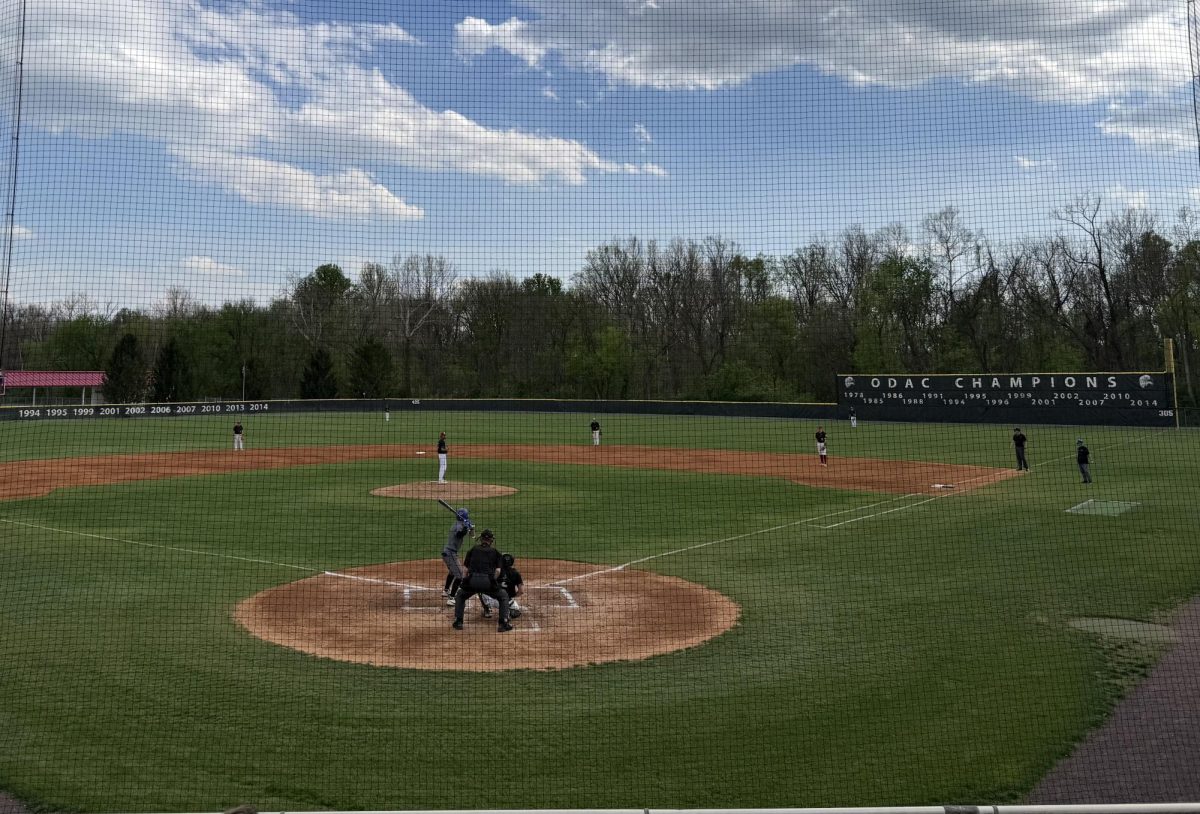








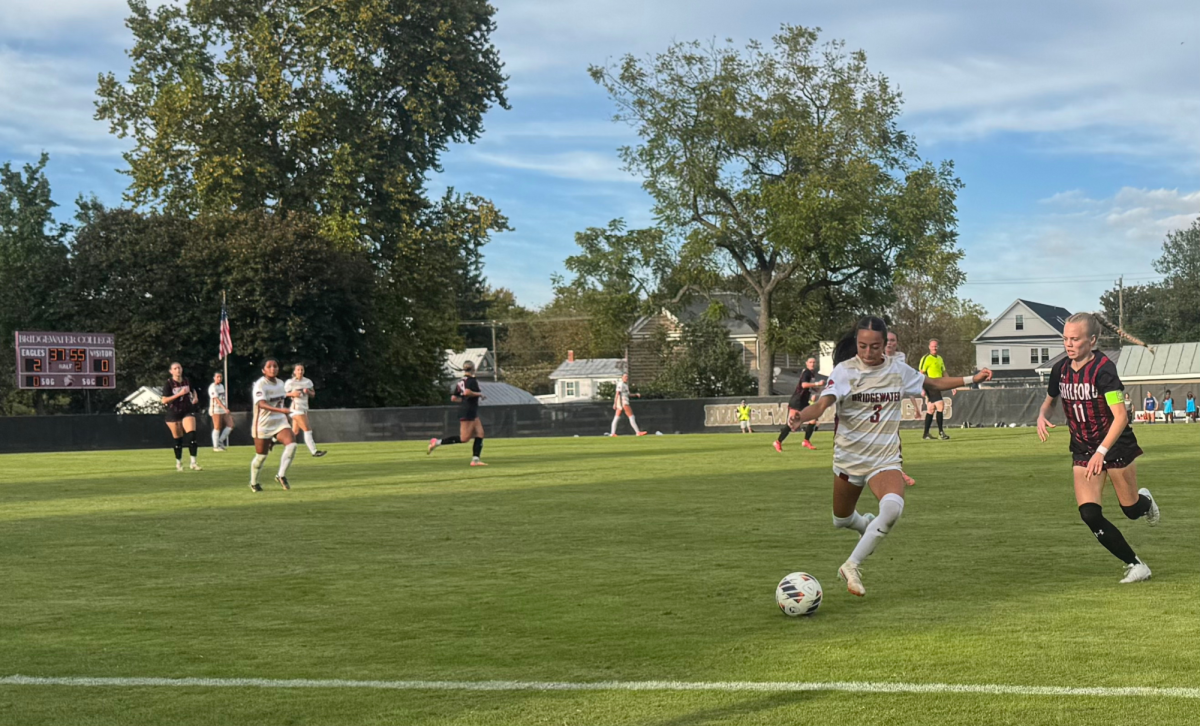
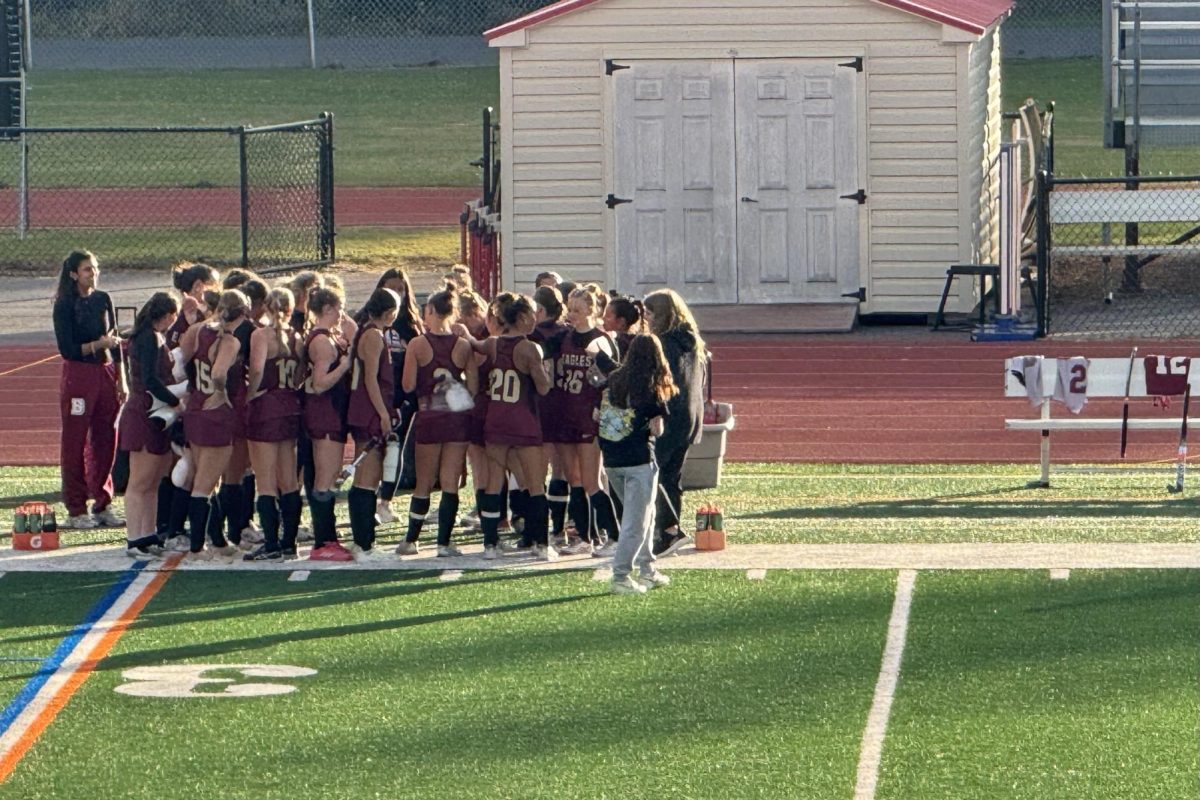
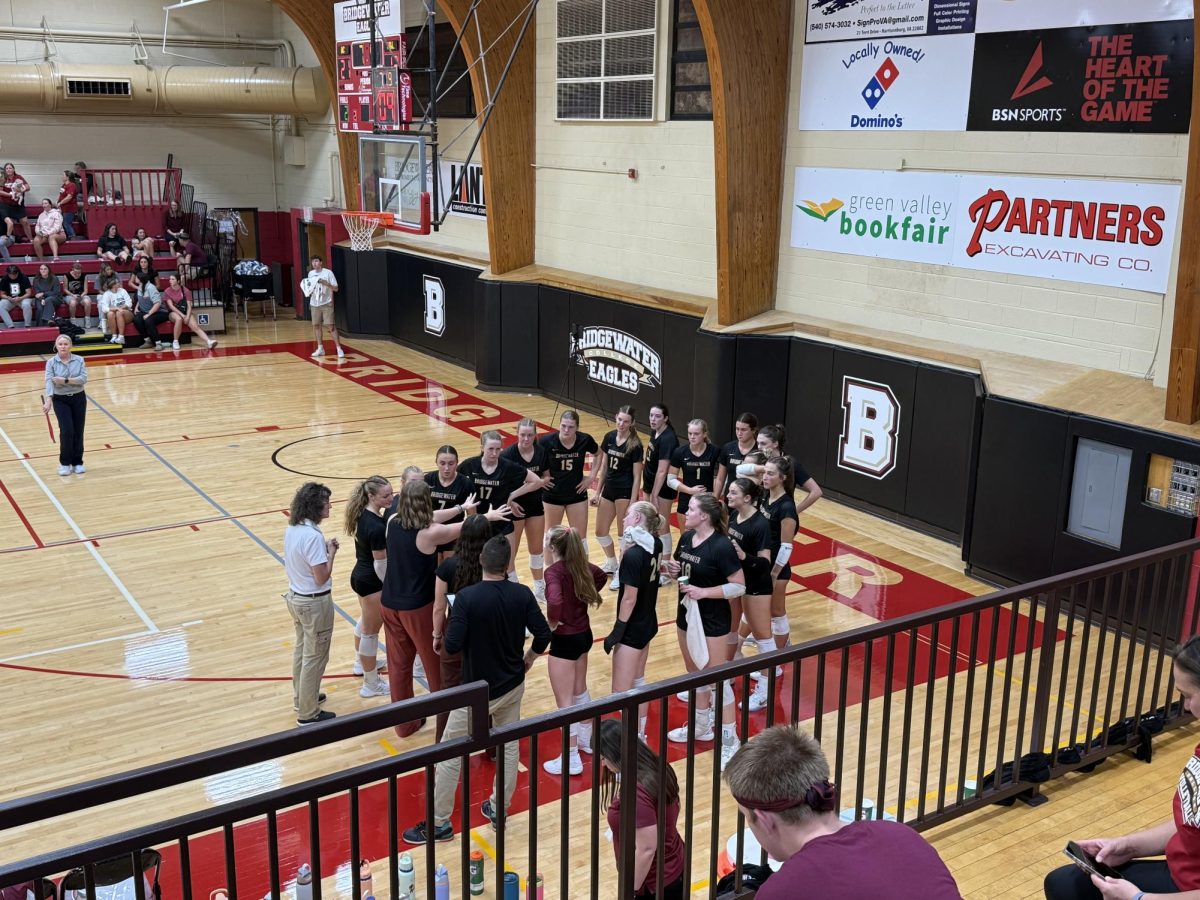
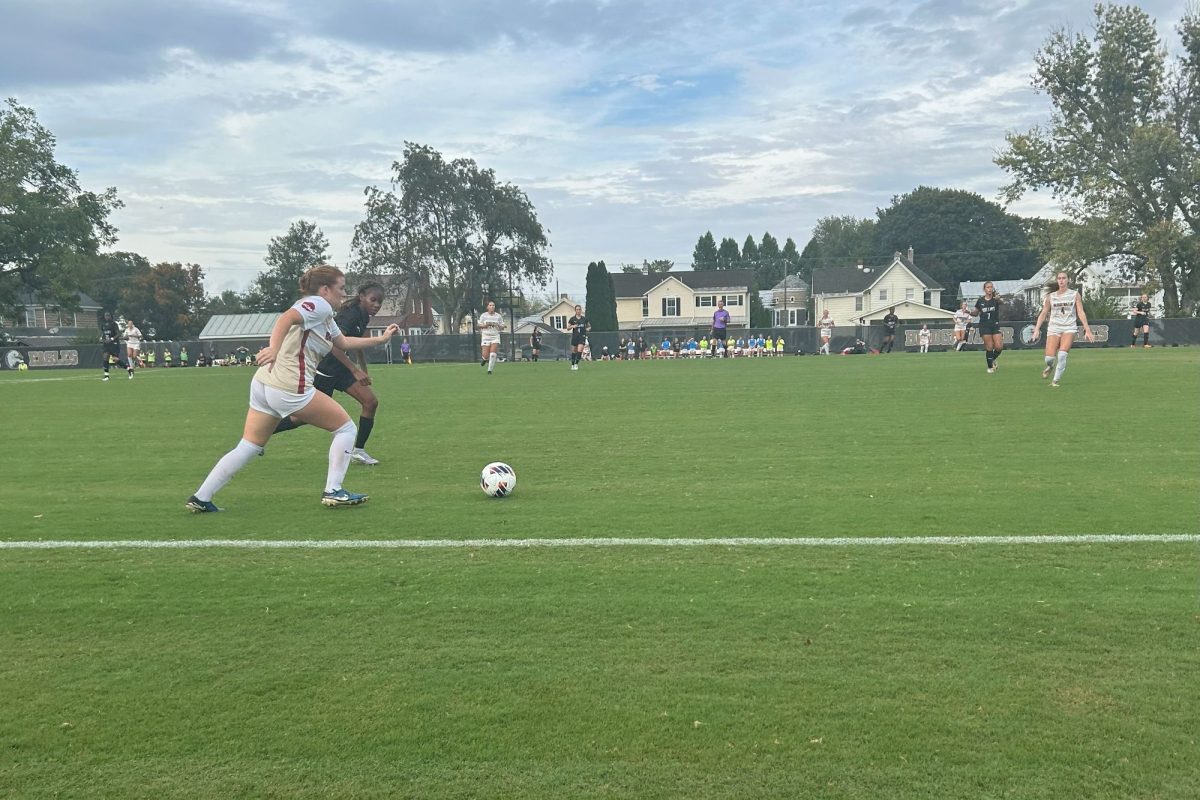














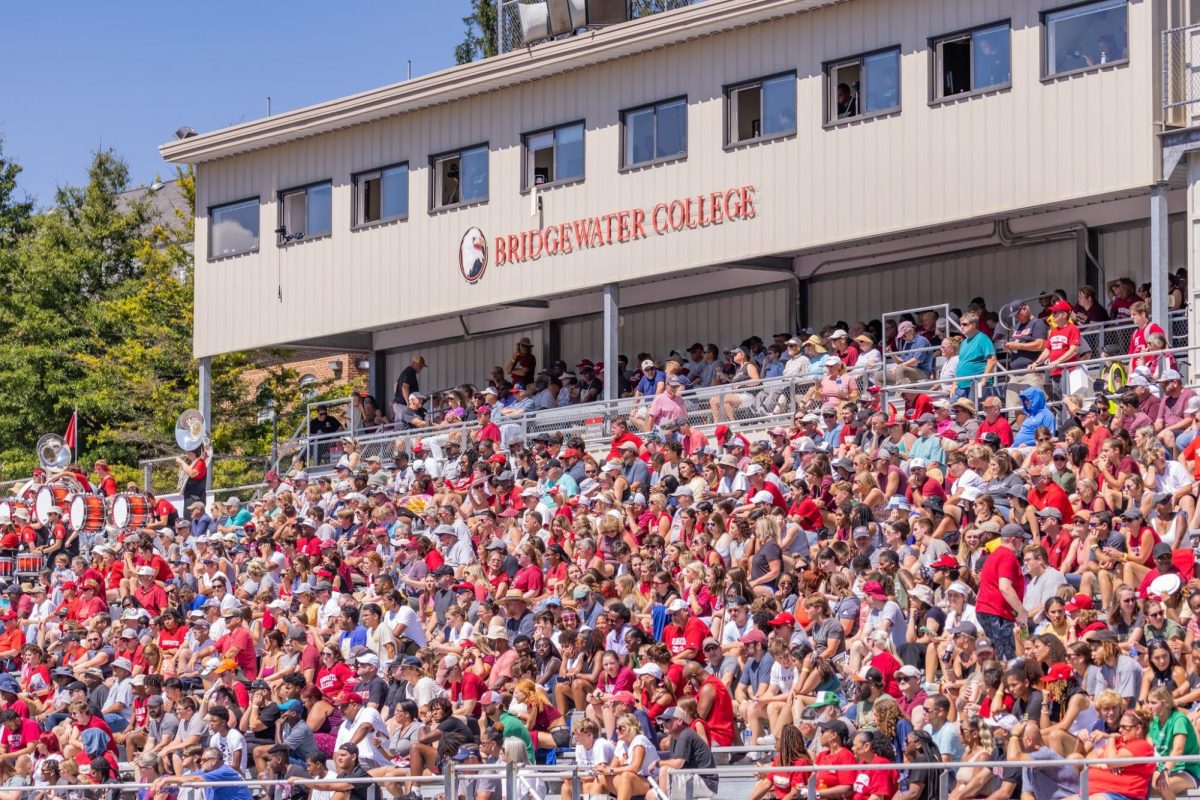
BRIDGEWATER, Va. – For most fans, a game ends with a final score. The recap appears online. Photos begin showing up on social media. Highlights are edited and posted. Statistics are updated. If the moment is big enough, it may become part of the lasting story of a season, a career or even a program.
What many fans do not see is the work that begins long before kickoff, tipoff or first pitch and continues after the event is over. At Bridgewater College, that work falls to the Athletic Media Relations office, a department responsible not only for communicating results but also for telling the stories of the athletes and teams behind them.
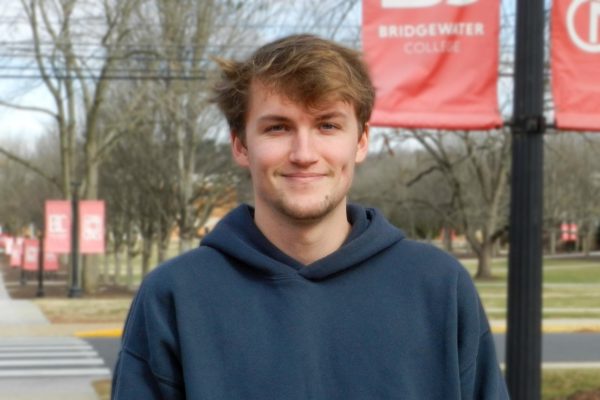
Bridgewater’s Athletic Media Relations department consists of three primary staff members: Director of Athletic Media Relations Leyton Pullin, Associate Director of Athletic Media Relations Lucas Van Deventer and Assistant Director of Athletic Media Relations Josh Smith, along with student interns who assist with coverage throughout the year. Together, they manage a wide range of responsibilities, including writing recaps and features, maintaining records and statistics, producing digital media content and helping document the stories of Bridgewater athletes and teams.
For Leyton Pullin, the purpose of the job is straightforward.
“My role is essentially, to easily put it best, to tell student-athlete stories, however that may be,” Pullin said. “There’s a lot of different ways to go about that, but that’s essentially what we do.”
That storytelling also shapes how people outside the program see Bridgewater athletics. Pullin said media content is often one of the first things recruits see when they look into a college.
“When it comes to recruiting, first and foremost, social media or any kind of media, that’s going to be the first thing a recruit sees when they look up Bridgewater College,” Pullin said. “They’re going to have that face-to-face interaction with the coach, but when they look it up they’re going to see our product. We want them to see us doing cool things. It’s such a huge recruiting tool.”
He added that the office’s work also helps connect alumni to current teams by highlighting both present accomplishments and the paths former athletes have taken after Bridgewater.
A changing field
A College Sports Communicators excerpt on media relations in sport explains that sports communication has shifted from a one-way system of distributing information to a faster, more interactive model shaped by new technology and changing audience habits. Pullin said that shift has been obvious even during his time at Bridgewater first as a student intern, then as an assistant, and now as director.
“Even in my four years here—this is my fourth year working here—it’s developed a lot,” Pullin said. “There’s a lot of things we do differently now from when I came in.”
He pointed to social media as one of the biggest drivers of that change. He said a lot of content goes to social media because that is where the current audience is going for information.
An Odgers article on the changing communication director role in sports notes that modern sports communication now depends heavily on multimedia storytelling, including video, graphic design, live streaming, and direct digital engagement.
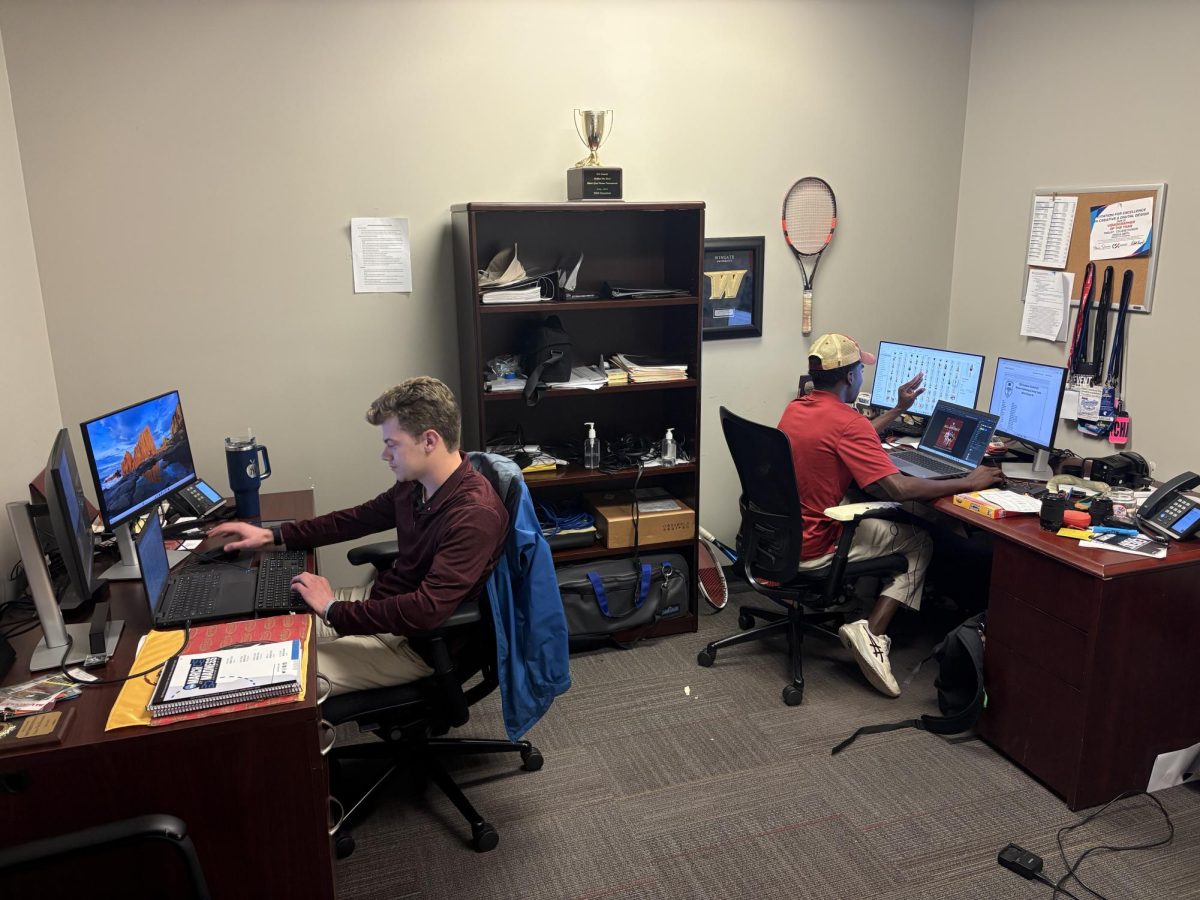
That evolution is visible in the work of Joshua Smith, Bridgewater’s assistant director of athletic media relations, who handles much of the department’s digital creative content. He said the digital side of athletics often shapes a first impression of a program with creative content like graphics, videos and “edits,” which are high-production highlight reels built to capture attention online.
“Kids are going to watch the edits,” Smith said. “No offense to writers, but it’s a lot smaller market now. It’s more demand for the flashy edits and stuff like that.”
Smith notes the creative side of athletic media relations is essentially the “front porch” of a lot of athletic programs, helping shape first impressions while allowing audiences to connect with athletes beyond highlights and final scores.
“Making other content that really gets you to know the athlete, I think that helps out a lot, and seeing them as much more than just an athlete, but a person as well,” Smith said.
Writing the record
Not every part of the job is flashy. Much of the office’s work still comes through writing, research and preserving program history.
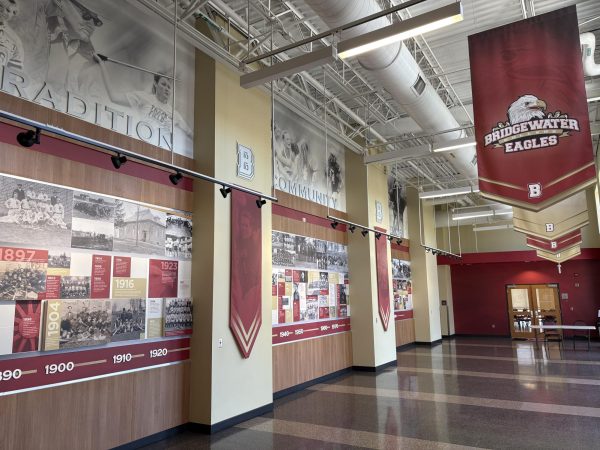
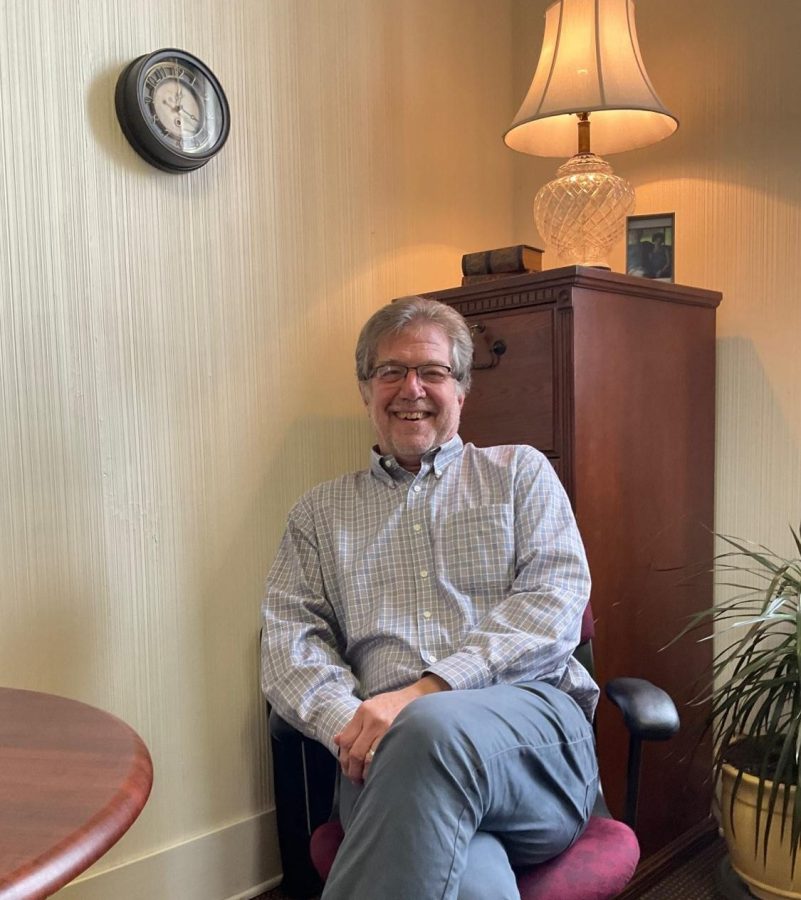
Lucas Van Deventer, Bridgewater’s associate director of athletic media relations, said his role centers on that side of the office.
“I’m more of the writer,” Van Deventer said. “I do a lot of historical features, a lot of the alumni that come through, and we do a lot of the ballots and nominate for the Bridgewater College Hall of Fame. And I’m the writer for that. So I do a lot of research as well.”
That work matters both in the moment and over time. On the short-term side, written recaps help families, alumni and fans quickly understand what happened in a game.
“I think it’s very critical that it’s a timely thing for sure to get information out in a timely manner,” Van Deventer said. “People are looking for an update on how a team did or what the performance was of a certain athlete.”
On the long-term side, the office is also responsible for keeping records, statistics and historical information accessible.
“Now that everything is digital, it’s more accessible and we are aware that people want to see it online,” Van Deventer said.
Telling compelling stories
“We’re trying to tell the story to students, the story that is BC athletes, and to capture that,” Smith said.
For Smith, doing that well takes more than pointing a camera at the action.
“To do that, I have to gather every detail possible,” Smith said. “I have to know the sport. Not only the sport, but I also have to know the small details of the sport, the meaning of the event, some storylines behind it and stuff like that. It isn’t just press and play on a camera.”
Whether the final product is a recap, a feature, a graphic or a highlight reel, the office is doing the same basic work: making sure athletes are seen and remembered.
“The big thing for me when it comes to media relations is to tell the story of an athlete, to get their story out there,” Van Deventer said. “They are balancing a hefty schedule with academics and athletics, so just to have an idea of their hard work and get their story out there is important.”
At Bridgewater, the score may be what fans see first. Behind it is a staff making sure that score is only the beginning of the story.