




















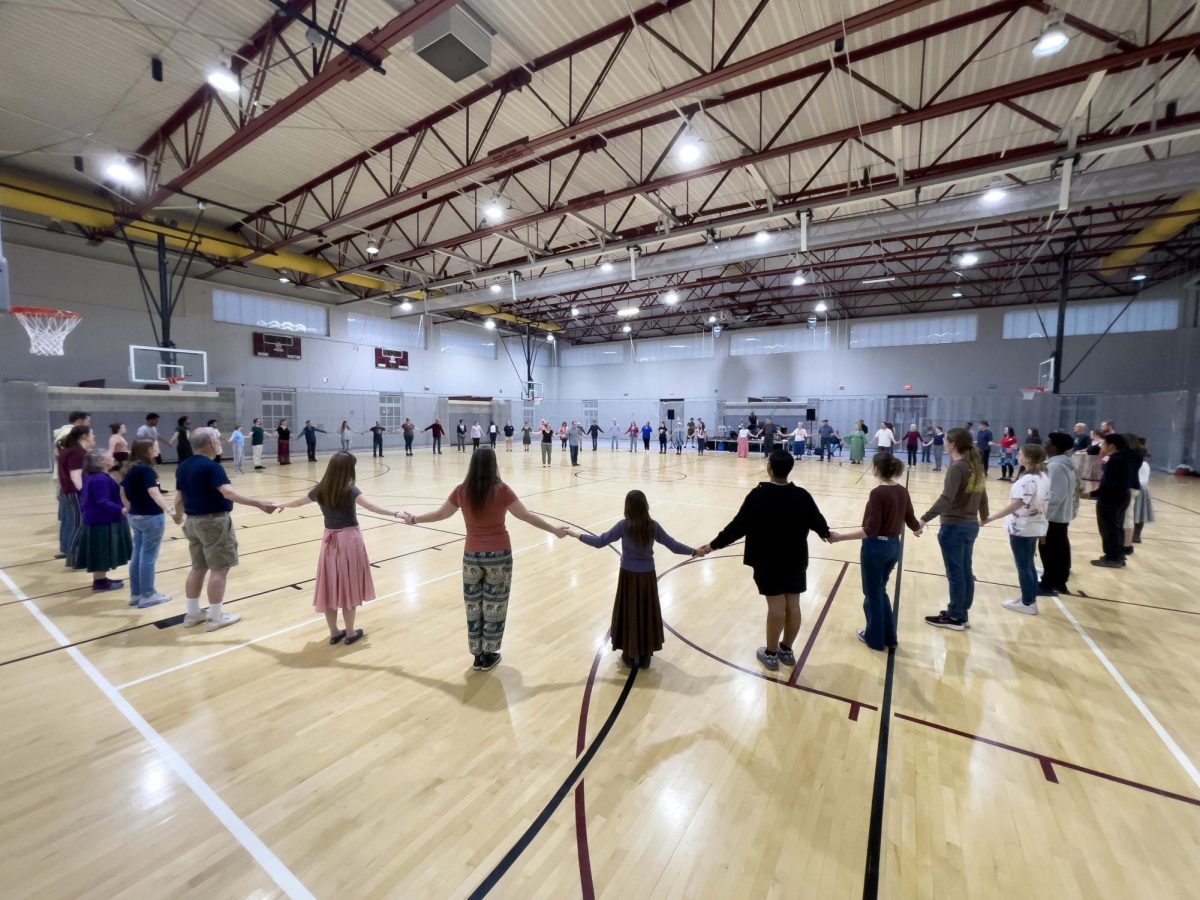

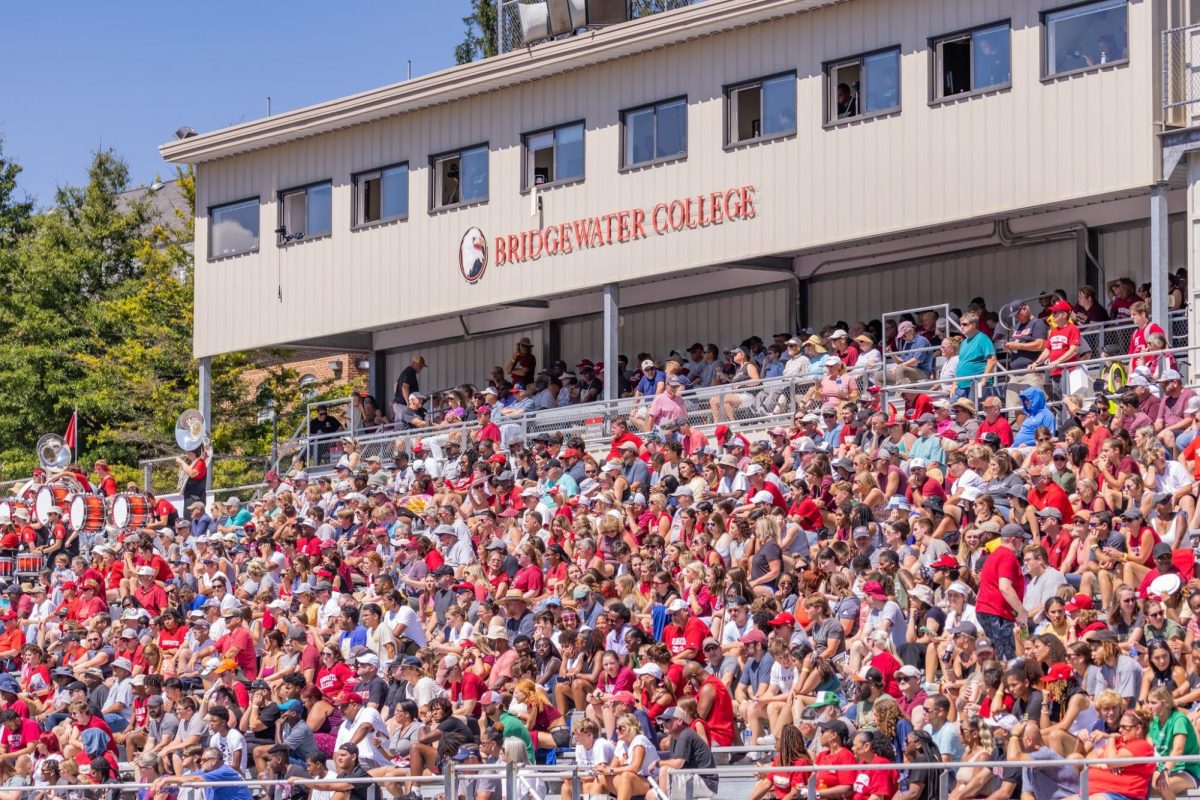
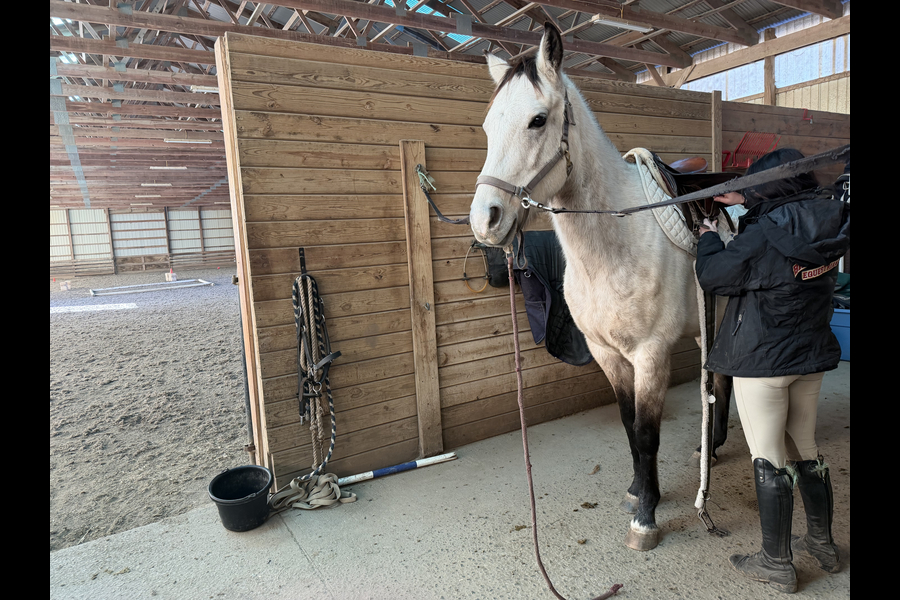
BRIDGEWATER, Va. – It begins at the campus connections fair, more commonly known as the “club fair.” Tables and posterboards are set up in a large square around the campus mall to represent all the different clubs the college has to offer. Club members smile brightly behind their tables as prospective members stop to chat or to ask questions. For those interested in horses the equestrian club table is where they stop.
One such student was Mckenna Doran. Four years ago she had nothing but an interest in horses. Now, she is a co-fundraising chair for the equestrian club and co-captain of the Intercollegiate Horse Show Association team.
“It was during the first club fair of the year of my freshmen year and, you know, just kind of wandering around looking for things to do,” Doran said. “So when I saw the, you know, trifold saying equestrian club I was like ‘oh other people who like horses.’”
Doran came into college having no experience and will soon be graduating with four years of riding and competing under her belt. Her experience illustrates why the IHSA was created.
The creation of college riding
In 1967, the Intercollegiate Horse Show Association (IHSA) was established by a student named Robert Cacchione at Fairleigh Dickinson College in New Jersey. Launched with just two colleges, the IHSA has grown and become a coast-to-coast North American association advocating for equestrian athletes and college riding.
According to the IHSA website the association is partnered with 400 member colleges in 45 states and Canada, and represents 10,000 members across different disciplines.
According to Mission – National Collegiate Equestrian Association (NCEA), established in 1998, the NCEA instituted equestrian as a varsity sport for women. Currently, there are 16 Division I and four Division II equestrian programs across the country.
College equestrian programs have been around for the last 59 years and have worked to promote and advocate for the sport as well as allowing for everyone at any experience level to get the opportunity to compete on a team.
While the IHSA and the NCEA are popular, they are not the only option available for college equestrians. According to the Complete Guide to Intercollegiate Riding Programs, IHSA and NCEA make up just two of the six associations or programs available to college equestrians across the country.
Impact on the college experience
Picking a college can be a big decision, but for some equestrians, being able to ride in college makes the decision for them.
“I don’t know what I would have done with my last four years if I hadn’t rode,” said Caroline Green, BC equestrian club president.
For Green, riding in college was so important that when deciding where to go she only looked at schools with equestrian programs. Having been a part of the equestrian club since her freshman year, Green has worked as the president of the club for the past three years, interacting with the campus community, running social media and overseeing the operations that make the BC equestrian club and IHSA team possible.
“Joining the riding team my freshman year gave me a purpose,” Green said. “It reduced my anxiety about being in a new place around new people because I had a familiar activity that I could return to.”
College equestrian programs have the great ability to create a sense of community for students. Bonding over a shared sport, going to competitions together and spending long days at the barn create lasting relationships for students.
“It just brings together a lot of usually like-minded people and usually everyone who joins has a love for the sport or a love for the animal and it’s just something that connects us all,” said Doran.
During her time as a member of the BC equestrian club and IHSA team, Doran found a supportive community that was always willing to share their experiences and uplift others.
“Your barn friends are a unique relationship and so I think that making friends who are also horse people should be special because you’re going to be able to communicate about things that no one else is going to really understand,” BC equestrian club advisor Whitney Showalter said.
While college riding has its positives, it is a competitive sport and can be a large time commitment as well as a stressor to an already busy college student.
“I think it would depend on the student and the structure” Showalter said.
Whether it be the added pressure of the sport or the strain of such a time commitment, students could potentially see riding as unnecessary stress on top of their studies.
“I mean of course in any kind of sport there’s going to be stress you know for competitions especially,” Doran said. “ I don’t think it’s been more stressful than any other sport.”
The last ride
At some point everyone must pack up their bags, hang up the stirrups and make their way onto the next ride. However, for those that chose to be college equestrians they graduate with lasting memories, relationships, and the skills they learned as college equestrians.
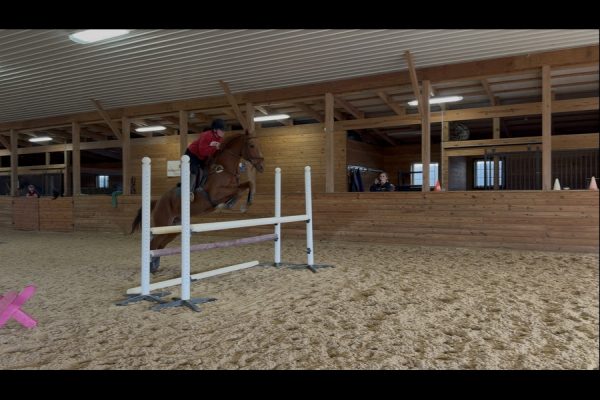
“I want for them to graduate feeling like ‘Oh I’m like much more. I’m so I’m empowered as an equestrian and I want to be in this lifestyle for the rest of my life,” said Showalter.
BC alum Mary Monaco said she became a better horse woman during her time as a Bridgewater equestrian.
“I also grew so much as a person and an equestrian during that time,” Monaco said.