




















































BRIDGEWATER, Va. – For generations, Greenland was defined by what it lacked: roads connecting its towns, year-round ports free of ice, and easy access to the natural resources locked beneath its frozen surface. Much of the island remained inaccessible, its role in global affairs shaped more by geography than opportunity.
That is changing.
According to CBS News, as Arctic temperatures rise and ice retreats, Greenland is becoming easier to reach, easier to navigate and increasingly difficult for global powers to ignore. Ice loss due to climate change has begun reshaping the island’s physical landscape and with it, its strategic and economic importance.
The effects are visible along Greenland’s coastlines, where thinner ice and longer ice-free seasons are altering shipping patterns in the Arctic. Routes once considered impractical are now viewed as potential corridors connecting North America, Europe and Asia more efficiently than traditional passages as seen on maps provided by CBS News. These emerging routes place Greenland at the center of Arctic transit and surveillance concerns, reinforcing its relevance to U.S. and allied security interests.
Together, these shifts have reframed how the United States views Greenland not as a distant outpost, but as a strategic crossroads shaped by climate change, competition and global demand.
Bridgewater College Associate Professor of History Brandon Marsh emphasized three key reasons for Greenland’s emerging global importance: new waterways, increased Russian activity and rare mineral deposits.
“In northern Greenland, as global warming happens, the ceilings to the north of Greenland are becoming more and more important,” Marsh said.
Marsh explained that Russian ships, vessels and submarines have moved through these areas, resulting in much of the Russian naval activity moving from Scotland, to Iceland and then over to Greenland.
As the planet warms, Greenland becomes an emerging player in the rare earth market according to Global Rare-Earth Reserves: Strategic Distribution and Resources. The potential to tap into these once inaccessible rare earth metals becomes increasingly more optimistic and whoever controls the mines will gain access to approximately 1.5 million tons of rare earths.
For the United States, Greenland represents a convergence of environmental change and strategic necessity. A place where climate impacts are not hypothetical but already reshaping global priorities.
A strategic location gaining new relevance
According to the Council on Foreign Relations (CFR), a nonpartisan think tank, Greenland’s importance has long rested on its position between North America and Europe, a factor that made it a critical site for military infrastructure during the Cold War. That strategic logic still applies today, but climate change has intensified its relevance. CFR stated that as the Arctic waters open for longer periods each year, Russian activity in the region has increased, elevating concerns related to defense monitoring, early warning systems and maritime awareness.
CFR stated that policy analysts have noted that Greenland’s geography places it along key Arctic and North Atlantic pathways, making it central to U.S. security planning as global competition in the Arctic grows.
What was once a frozen buffer is becoming a zone of movement and with movement comes strategic interest.
Greenland’s rising economic and strategic value has not gone unnoticed internationally. As Arctic accessibility improves, global powers have increased diplomatic, scientific and economic engagement in the region. According to CFR competition over influence, infrastructure and access has become more pronounced, adding geopolitical pressure to Greenland’s evolving role.
At the same time, Greenland faces complex decisions about development, environmental protection and sovereignty. CFR stated that climate change has opened new possibilities, but it has also introduced long-term risks that will shape how the island navigates growing international attention.
“Being able to expand our security capabilities and the speed at which we are able to detect and respond to threats in the area is a key reason for our interest,” Joint Force Coordinator Michael Lepson who works in Joint Staff operations said. “It is important to maintain a military presence to act as deterrence and security in the region.”
Climate change and economic opportunity
Beyond security concerns, warming temperatures are reshaping Greenland’s economic potential. Retreating ice has made it easier to access mineral deposits once buried beneath glaciers and permafrost. According to Modern Diplomacy, Greenland contains substantial reserves of rare earth elements, graphite, gold and other critical materials used in electronics, renewable energy technologies and defense systems.
“There’s arguments about rare earth materials and mining opportunities in Greenland,” Marsh said. “That is less promising because it’s so difficult to work in that environment.”
Despite these difficulties, some believe that the economic opportunity of the rare minerals is the most important factor at play.
“I believe that we are masking economic decisions as military ones,” 2nd Lt. Jared Lepson of the United States Army’s 82nd Airborne Division said, noting this is not the official United States Army Opinion.
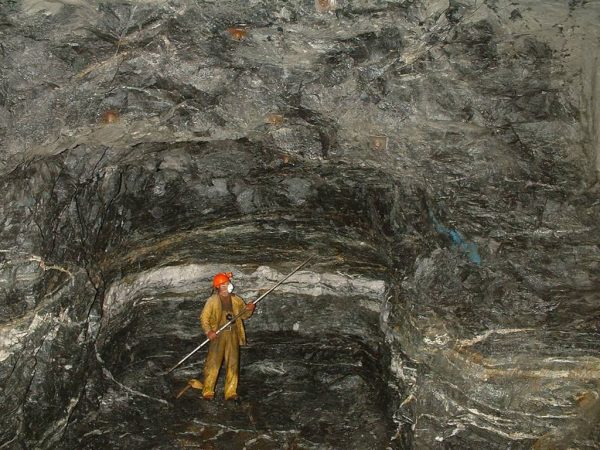
Recent data from World Data highlights Greenland’s growing significance within the global rare earth supply chain, particularly as countries seek alternatives to existing dominant producers.
Climate change has accelerated access to these resources, transforming Greenland from a largely untapped frontier into a potential contributor to future supply security. For the United States, securing reliable access to critical minerals has become a strategic priority, linking Greenland’s environmental transformation directly to broader economic and national security concerns, according to CFR.